Many of us want to live greener lives but feel overwhelmed by the scale of environmental issues. Taking that first step often seems daunting when you try to do it alone. That is exactly why local, eco-friendly gatherings matter so much — they make huge global challenges feel manageable at a neighbourhood level.
In this article, we explore the lasting impact of sustainable community events. We’ll look at popular activities like swap meets and upcycling workshops, and uncover the benefits these gatherings bring to our towns and cities: from reducing household waste to building lifelong friendships.
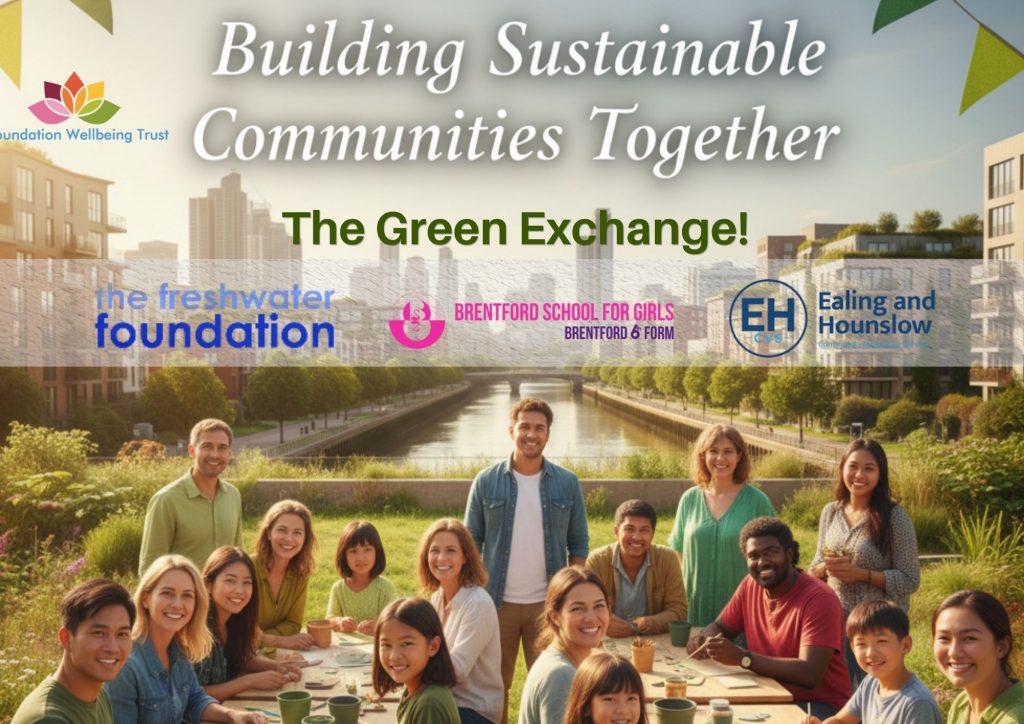
It’s important to highlight that none of these events would be possible without true collaboration. We are deeply grateful for the essential support of our sponsor partner, the Freshwater Foundation, our sponsor venue and flagship partner Brentford School for Girls, and our support partners at Ealing and Hounslow Community and Voluntary Service. Their shared commitment and partnership ensure our community projects have genuine impact.
Want to get involved? Find out more on the Foundation Wellbeing Trust Community Projects page.
The Core of Sustainable Community Events
Sustainable community events bring people together to learn, share, and practise eco-friendly habits. From small neighbourhood clothing swaps to large city-wide green festivals, these events make sustainable living accessible, enjoyable, and highly social.
Projects such as the Green Exchange swap events and workshops move the conversation away from guilt and restriction. Instead, they focus on creativity, abundance, and shared resources. When you attend, you’ll see that living sustainably isn’t about giving up things, but about enjoying what we need in new and smarter ways.
Anchoring environmental action in the local community drives visible, immediate change. You can see the pile of clothes saved from landfill, or chat with a neighbour who’s just learned how to upcycle broken jewellery or turn old magazines into creative gift wrap. Tangible progress like this keeps people motivated and eager to do more. Learn more about FWT’s creative eco-initiatives here.
Popular Activities That Spark Local Change
The best eco-friendly events are hands-on and for everyone — no environmental science degree needed! Here are three of the most popular activities you’ll find at a green community gathering.
Swap and Save Events
Swap events are a brilliant alternative to traditional shopping. Bring items you no longer need and take home things you actually want. Clothing swaps are incredibly popular, but you’ll also see options for books, toys, and kitchen gadgets.
These events tackle overconsumption head-on. Instead of buying new items produced far away, you find hidden treasures close to home. This simple act saves water, shrinks your carbon footprint, and keeps good items out of the local tip.
Swaps save families a significant amount of money. Refreshing your wardrobe or finding new toys for your children without spending anything is a huge relief for many. The stressful experience of shopping becomes a fun, treasure-hunting adventure with your neighbours.
Upcycling and Repair Workshops
We live in a culture that encourages us to throw away things as soon as they break. Upcycling and repair workshops flip this mindset. These sessions teach people how to fix broken costume jewellery or transform newspapers and old magazines into something new.
At Green Exchange workshops, volunteers share practical skills — from mending jewellery to creating decorative items from old papers. For something even more hands-on, our ‘Art from the Earth’ session lets you experiment with making colours using kitchen ingredients, soils, and grass, led by Jacqueline Douglas, a seasoned professional artist from University of Arts London. If you’re interested in sustainable jewellery, join the inspiring workshop run by Farah Quereshi, an award-nominated upcycling silver maker, who shares acclaimed techniques for crafting jewellery in environmentally friendly ways.
These workshops offer true empowerment. When you fix something with your own hands, you feel proud and start to see yourself as a creator — not just a consumer.
Community Networking Gatherings
Sometimes, the most powerful thing you can do is simply talk to someone new. Sustainable networking events bring together local residents, business owners, and environmental groups to share ideas and launch new projects.
You might meet a parent who loves art but struggles to get creative with their children at home, or a teacher looking for volunteers for a school garden. These connections build a resilient community, and networking combats the isolation that often comes with environmental advocacy. When you’re surrounded by neighbours who share your values, you gain inspiration and energy — realising you’re not alone and have a whole team beside you.
The Hidden Benefits of Going Green Locally
Participating in these events does much more than lower your carbon footprint. The positive impact ripples outward, touching almost every aspect of neighbourhood life.
Slashing Household and Local Waste
The most obvious benefit is a massive reduction in waste. Every item swapped, fixed, or upcycled is saved from landfill. Over time, these small actions add up to tonnes of diverted waste.
Less waste also reduces the financial burden on councils — freeing up funds for parks, schools, and infrastructure, rather than waste management. As swapping and repairing become habitual, communities gradually shift away from a throwaway culture toward a thoughtful, circular economy. For more on waste-reduction events, visit the FWT event page.
Building Stronger, Resilient Ties
Loneliness is a growing challenge in modern British society. Sustainable community events break down these invisible walls by providing a shared purpose and natural reasons for people to interact.
Bonding over art or upcycling creates trust, which results in safer and more supportive neighbourhoods. In times of crisis, communities with strong social ties recover faster, as residents know they can rely on each other. Broadening participation also bridges generational gaps, with young people teaching digital skills and older residents sharing practical know-how.
Learning Practical, Lifelong Skills
Education is a cornerstone of local green events — but not the classroom kind. Instead, it’s hands-on and can be applied straight away in daily life.
Knowing how to mend clothes, repair items, or compost food scraps for art increases independence and resilience. These skills make your household more adaptable and less reliant on big corporations, while rising costs have less impact. Best of all, these skills are passed on naturally between community members, creating lasting change.
Spark Change in Your Hometown
The beauty of sustainable community events is that they’re for everyone — you don’t need a special invitation to join in. The power to create a greener, more connected neighbourhood is in your hands.
Start by searching for events in your area: check community centre noticeboards, social media, or local libraries. Attend a clothing swap or join an upcycling workshop from the Foundation Wellbeing Trust. Bring a friend, or simply meet new ones!
Remember — every big movement starts with a simple action. Step outside this weekend and start building the sustainable community you want to live in.
Find more inspiration and upcoming events at Foundation Wellbeing Trust.
Article written by Ariane Eva Morin March 2026